Type at least 2 characters to search
Featuring Dosimo · Issue №1
Dosimo
Instrumental hip hop rooted in nostalgia, texture, and late night atmosphere.
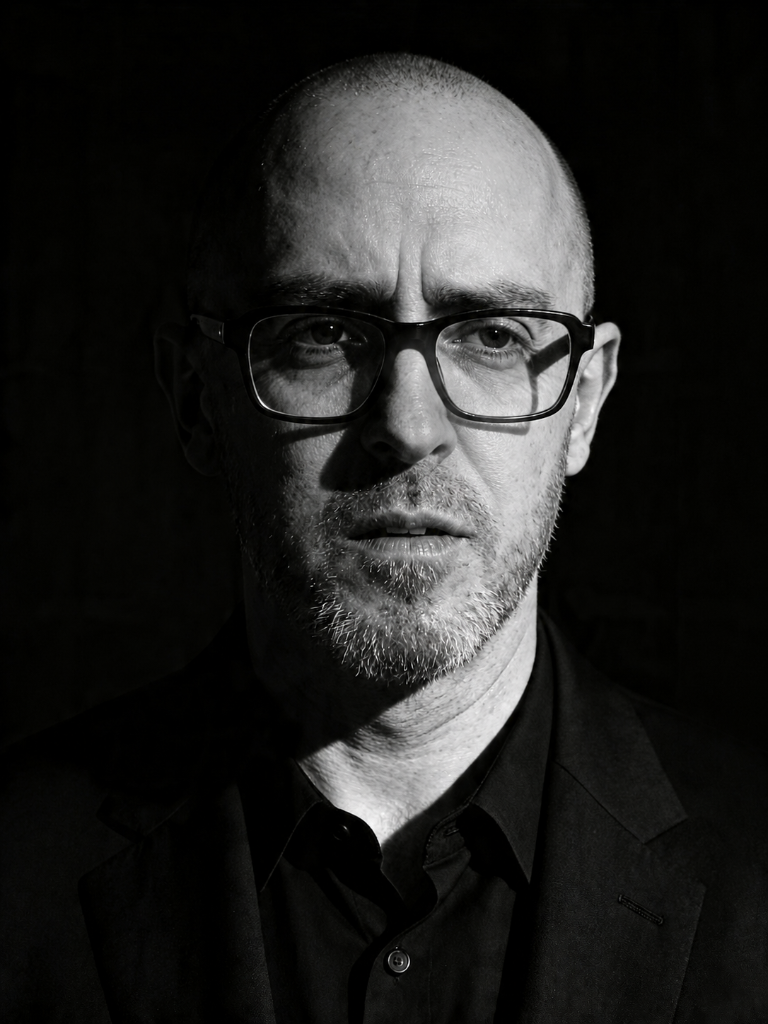
I'm Dermot O'Mahony. I'm an Irish composer, producer and sound designer. I've worn a lot of different musical hats over the years, from playing in an alternative hip hop band, hosting raves and running my own club night, to producing house and electronic music, composing for film and audiovisual installations, and eventually starting Dark Harmonic Studios and my own label.
Start us off with Dosimo. How would you describe the project to someone who has never heard it?
Dosimo is basically where all those different parts of my musical life have come together. It's mostly downtempo and trip hop, but everything I've done over the years seems to find its way into it in some shape or form.
Paint buckets, a Casiotone and your dad's Stylophone. Where did all of that start?
I've played music for as long as I can remember. I was one of those kids who would make an instrument out of absolutely anything. I had a Casiotone keyboard, a plastic electric guitar, an old set of bongos, my dad's old, slightly corroded Stylophone, and if I needed a drum kit, I'd make do with whatever was around, turning empty paint buckets upside down and using biscuit tin lids on sticks as cymbals.
What was the first music that got its hooks into you?
I was also obsessed with my older brother's record and tape collection.
The machine that fell apart
Take us back to that GEM keyboard in your dad's house. What do you remember?
One of my earliest proper musical memories is actually messing around with my dad's GEM workstation keyboard. He let me play with it when I was quite young, around 1990 or 1991. You could program beats and create some pretty sophisticated sounds for the time. I became obsessed with pushing it until I completely filled the memory.
What did that GEM keyboard do once you maxed out the memory?
Once it was maxed out, the machine would start doing these bizarre things. It would spit out this circuit-bent, alien chatter, with warped sounds and strange glitches. I had never heard anything like it. I didn't know there was a whole world of experimental electronic music out there. It just sounded alien, slightly demonic and really fun.
It was like a panic attack made out of electronics.
And that early instinct to push a machine until it does something unexpected has probably never left me.
How did your dad's old acoustic guitar end up in your room?
I later found my dad's old acoustic guitar in the attic and asked if I could borrow it. I watched him clean it, restring it and play it, then I took it to my own room and started figuring out chords and songs.
Hip hop, raves, and a pub called Crusoe's
Take us back to school. Where did you fit in, musically?
At school I never really fitted into one particular musical tribe. I wasn't a metalhead and I wasn't a stereotypical rave kid either. I was actually a huge hip hop head. Baggy jeans, baseball jerseys and snapbacks were much more my thing.
What were you taping off late-night TV?
I got into House of Pain, Cypress Hill and the Beastie Boys, then started recording late-night music programmes from TV onto VHS. That's where I discovered things like Body Count, Wu-Tang and N.W.A. I loved the attitude, the sampling, the huge drums and the fact that people seemed completely unapologetic about what they were doing. Compared with the "why?" and "I hate you" side of grunge, hip hop felt much more like "what?" and "fuck you", although I probably shouldn't have spoken to my teachers like that at the time. Haha.
Then The Prodigy arrive. What did that do to your head?
Then music like The Prodigy came along and became a huge influence because suddenly all these worlds seemed to be colliding. I wanted the hard, sampled drums of rave music, the weight and aggression of rock, the attitude of hip hop and the strange sounds of electronic music.
When did you start making your own tracks?
I started making electronic music myself quite early. I used the PlayStation Music and Music 2000 programs to build beats and sequence tracks, and I had a couple of cheap Yamaha DJX keyboards. They were basically toys, but they were what I could afford.
How did you and Andrew K end up throwing parties together?
Andrew K was originally a friend of my older brother, but he quickly became one of my closest friends after I was introduced to the gang in our local pub, Crusoe's. He was an aspiring DJ and introduced me to a lot of the clubbing and party world. We bonded over music, drinking, the film Human Traffic and the whole Friday-night-after-work lifestyle. We started going to raves and dance events together, including Homelands at Mosney, Creamfields, beach raves, and a few chaotic house party crashes, and I became fascinated by DJ culture and the energy of those nights. While my friends were getting into crate digging and beatmatching, I was more interested in making tracks, playing keyboards and figuring out how you could create music live. Eventually Andrew and I started talking about throwing our own raves. That became External Sounds.
What did that first External Sounds party actually look like?
Neither of us had attempted anything like this before, so we were literally spreading the word ourselves around the beer garden of our local nightclub, keeping the location secret until the night and somehow managed to create this completely insane party at a clearing in the woods at Townley Hall just outside Drogheda, with a few hundred people turning up.
External Sounds becomes a real thing after that. What did it take to keep it going?
Neither of us really knew what we were doing, but something clicked that night. It sparked a kind of movement through our extended circle of friends, and each event after that became bigger, more ambitious and more elaborate. Andrew naturally took the lead as things grew, while I became increasingly focused on the creative and live music side of what we were building together.
Copious, and an attic full of machines
Tell us about Copious. How did that band come together?
Around the same time, as I was exploring my more hedonistic side in clubs and raves, I formed a band called Copious with my friend Boots Kinsella on drums and Rob Mullen on turntables, who also joined the External Sounds crew later on. We were the three core members, although the lineup changed quite a bit through different phases of the band as the sound became edgier, more experimental and psychedelic, with strong trip hop influences.
What did a Copious session actually look like?
We started jamming every Sunday at Boots' house and later moved the sessions into my attic room. By then I'd moved beyond the basic keyboard setup and started collecting weird synths, gadgets and anything else I could use to manipulate sound. I was also getting into tape dubbing and the strange things you could do by repeatedly recording and degrading sounds. It all fed into the way we worked with Copious.
How did the three of you write together?
Everything was very loose and spontaneous. We weren't trying to create some perfectly rehearsed electronic band. We would jam, record things, develop a catalogue and then take a semi-rehearsed version of it onto a stage. Different musicians and guests would come and go, and we incorporated live visuals into the performances.
What was your role inside the band?
I was doing synths, guitar and vocals, but I was also producing, writing and directing the overall thing. Copious became a really important part of External Sounds because I was always interested in the idea of putting live electronic musicians on stage and then having DJs take over afterwards. That crossover became one of the things I loved most about the nights.
Electric Picnic 2008. Talk us through that show.
We even took our analogue 3D Audio Visual show to Electric Picnic in 2008, where we jammed live alongside the 3D visuals being projected for the audience. So even quite early on I was already combining music, improvisation and visuals.
Manchester, Logic Pro, and the Purple Room
Then you moved to Manchester. Why?
External Sounds itself evolved from those early outdoor parties into something much bigger. At one point Andrew and I moved to Manchester. Andrew was going to study, but I wanted to actually live inside the culture that had produced so much groundbreaking music. I didn't want to visit Manchester and just say I'd been there. I wanted to experience it properly. That first experience was transformative.
You went back and enrolled at the School of Sound Recording. What was that stretch like?
I eventually returned to Ireland, but I knew I wanted to go back. When I did, I enrolled at the School of Sound Recording to study Music Production and Technology and moved in with friends in an amazing four-storey party house. I still miss that place.
Then the first MacBook arrives. What changed?
I bought my first MacBook and started properly learning Logic Pro from my bedroom. My production basically exploded overnight. I suddenly had this completely new DAW setup and I wrote hundreds of songs during that first year. It was the first time I had a setup where I could experiment endlessly and actually keep up with the ideas in my head.
How do you keep a party crew going from another country?
Meanwhile, as External Sounds continued in Ireland, I was still involved with the crew, particularly on the live side. From Manchester I would search for and connect with interesting bands and electronic artists, send the MySpace links to Andrew and help curate what we booked. Whenever we had a night on, I'd travel home from Manchester, host it with the rest of the crew and then fly back shortly afterwards.
Tell us about the Purple Room.
Eventually the collective found the Purple Room in Drogheda. It was an unused poker room tucked away at the back of a venue. Rob described it as looking like the inside of Prince's pocket. It turned out to be perfect.
What made that room work?
The Purple Room became our little hub of creativity and partying. We could have a live electronic act on stage and then the DJs would take over. It was exactly the live and DJ crossover I'd been interested in from the beginning. The room developed its own identity and some really interesting DJs and electronic artists from around Europe ended up playing there.
Freeman Bear, film music and a Zero 7 remix
Where did Freeman Bear come from?
Alongside all of this I had started developing Freeman Bear, my solo house music project. That music was very much fed by the nights I was living through. The sweaty little clubs, the DJs I loved, the late nights and the inevitable afterparties all found their way back into the studio.
And the film scores. How did those start?
And then there was the film work. The film composition was developing alongside the club and electronic music rather than replacing it. I worked with Frank W. Kelly on projects including 140, Raise My Hands and Derelict, and with Victoria Charters on Backstage. 140 became particularly important because of something that happened later.
The Zero 7 remix is a good story. Start with Danilo playing for you.
We booked Danilo Plessow, Motor City Drum Ensemble, to play at External Sounds. He played to a sold-out dancefloor and afterwards he and a group of people from the afterparty came back to my house. We ended up partying into the small hours talking about music.
What did he ask you for?
A few months later Danilo reached out on Facebook. He was working on an official remix of Zero 7's Home and asked to hear some of my work. I sent him some of the music I'd written for 140, including the string sections. He asked if I could do something similar for the remix.
What did you actually send him?
I wrote and recorded the strings with a violinist friend, and External Sounds member Tadhg Murphy, and sent them over to Danilo. He then ended up scrapping the original version of his remix and completely rebuilding it around the strings I'd written.
These different parts of my musical life suddenly collided.
What was it like when he rebuilt his remix around your strings?
That was a pretty extraordinary moment for me, because Zero 7 had been one of my favourite bands for years, and something I'd developed through my film work had ended up completely changing the approach of an amazing producer working on one of their remixes.
And then Sam Hardaker from Zero 7 turns up the same weekend?
As it happened, External Sounds had also booked Sam Hardaker from Zero 7 to play a DJ set the same weekend I was recording the strings. Tadhg and I got to chat with Sam about the remix, tell him what we were working on and pick his brain about how Zero 7 approached recording strings. It was a really insightful meeting, and his advice helped bring the production closer to the sound and character of Zero 7.
How did Vermont come out of all that?
That relationship eventually led to my involvement with Vermont and the two Vermont albums on Kompakt with Danilo and Marcus Worgull.
Where else have those strings turned up?
There were other interesting branches from that period too. I collaborated with Hugo LX on a track called Desire, which also featured Gael Petrina and Florian Pellissier and later appeared in an episode of HBO's The Righteous Gemstones. My string composition and production also featured heavily in Dixon's remix of the Vermont track Dschuna.
Sound design, and a room beneath the streets
Sound design. How did you end up doing installations at that scale?
At the same time, the film and electronic work was feeding into another part of my career, sound design. Through TKM9 I worked on interactive sound and installations for major international spaces and brands including Heathrow Airport, LAX, Dubai Airport, Brisbane Airport, Etihad, Australian Open and Florida Mall, as well as interactive and game-related projects.
What did that work teach you about sound?
That was another big education for me because sound stopped being just something that belonged in a song. It could become part of an environment. It could change how someone experienced a physical space or interacted with something.
Which brings us to Project Animus. What is it?
That thinking eventually fed into Project Animus in 2022, my audiovisual project combining cinematic orchestration, electronic textures and experimental sound design. It's a meeting point between the organic and the synthetic. We built a physical installation around the large broken Animus being, with parts of its body failing and its shattered memories projected onto a screen that could only be viewed by the audience through special polarised glasses.
What does the audience actually see and hear?
As the story intensifies, the visuals spill out from the screen and surround the audience. Two hooded, faceless monks sit either side of this mythical dying being as it flashes premonition-like images from its corrupted brain. I had some amazing musicians involved with the project too, including Joe Heeney on synths and FX, Volodymyr Kotliarov on cello, Tadhg Murphy on violin and my father, Pat O'Mahony, who worked with me on the build and installation.
Where did the idea for Animus come from?
At its heart, the show Animus: The Last Human is a look at how artificial intelligence might take over creativity and, eventually, lead to a kind of creative rebirth. The first Project Animus installations took place in a room that time forgot beneath the streets of Drogheda, which felt like a perfect setting for it.
Why Dosimo exists at all
So although it might look from the outside like I've had a lot of completely different careers, I've never really thought about it that way.
What's the thread running through all of it?
When I look back at all of these different things, I think the common thread has always been curiosity. I've never really cared whether something was supposed to be a film score, a club track, a live performance, an installation or a piece of sound design. If I found an interesting way of making sound do something, I wanted to follow it and see where it went. I suppose I've been doing that since I was a kid filling up the memory on my dad's GEM keyboard and listening to it fall apart.
So where does Dosimo fit in all of this?
That's probably why Dosimo feels like a natural place for me to be now. It's rooted in hip hop, trip hop, electronic and experimental music, but there's also a lot of cinematic composition, orchestration, ambient textures, live instruments, sampling and sound design in there. The artists who have always excited me are people like DJ Shadow, UNKLE, Massive Attack, RJD2, The Cinematic Orchestra, Radiohead and Nils Frahm.
You're not trying to sound like your heroes, then?
I'm not trying to recreate any of those sounds. I'm more interested in taking the things I've learned from all of those worlds and seeing what happens when they collide.
You've also gone deep on the technical side.
And then there is the technical side, which has become a huge part of how I work now. I've spent years learning production, mixing, mastering and acoustics, and I've become more and more obsessed with the nerdy side of it all.
When I look back at it all, these different areas of music and sound I've been involved in, it doesn't really feel like a series of separate projects.
It feels like one long experiment.
Where does it go from here?
I started with a Casiotone, some paint buckets and my dad's GEM keyboard. I just kept following the sound.