In the Studio with Dosimo
New album
Beneath A Sky Called Home
Production BreakdownCome Rain or Shine
Debut album out October 30, 2026
Scroll down below to read the whole production breakdown, plugin by plugin.
Out now on vinyl
Beneath A Sky Called Home is out now, pressed on vinyl and CD through Elastic Stage.
Buy the vinylTrack List
Beneath A Sky Called Home · 9 tracks
- 01Dawning5:14
- 02Come Rain or ShineProduction Breakdown3:45
- 03What Do You Want From Me?5:39
- 04Gone4:21
- 05Won't Let You Down3:14
- 01Truth Hurtsfeat. J Fitz5:05
- 02Find Me In The Shadows6:20
- 03Best Wishes5:07
- 04Goodbye5:28
Scroll down below for the full production breakdown of “Come Rain or Shine”, every plugin, chain and session screenshot, stage by stage.
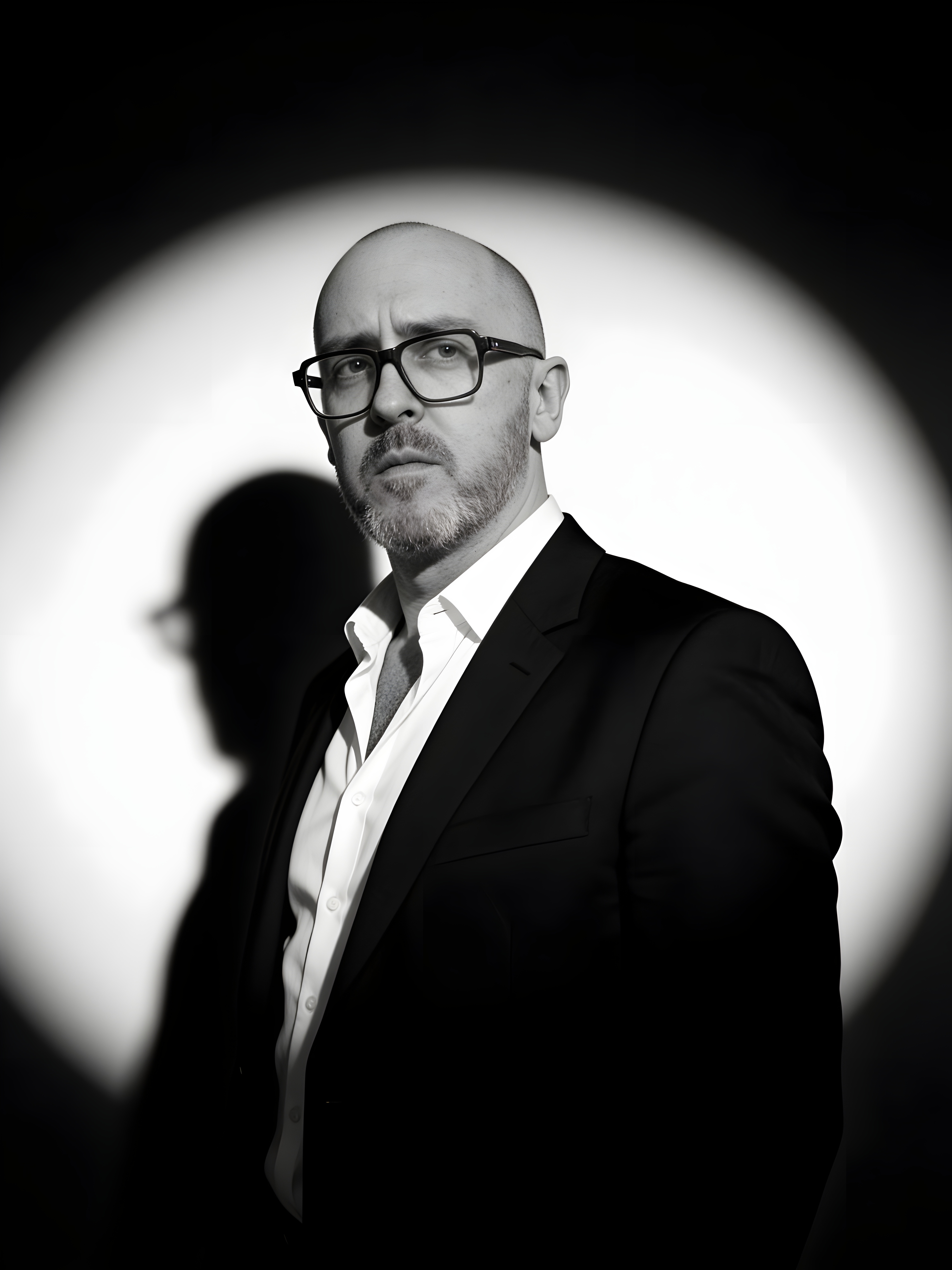
There is a version of this story where the record gets made in a proper room, with a budget, a calendar, and somebody bringing coffee. This is not that story. Dosimo made his debut album in three hour windows, once his partner and their two month old daughter had gone up to bed. "Every evening, when Mammy and baby went up to bed, I knew I had three hours to produce and get ideas down before she woke for her bottle," he says.
"Come Rain or Shine" is the clearest window into how he works. A steady trip hop beat, piano and acoustic guitar, sampled movie dialogue, little gospel elements and a female vocal drifting through the frame, and then two string lifts that turn a small, private song into something much bigger.
It sits on his debut album, Beneath A Sky Called Home, which arrives October 30. The track is the door. The album is the room.
We asked him to open the session up completely. What follows is his account of how the track was built, stage by stage, and what he reached for at each decision.
Come Rain or Shine
In His Words: A Note on "Come Rain or Shine"
The unusual part of this record seems unconventional but was completely deliberate. I'd reached a point where the session was enormous and I was starting to run into memory issues and freezing, so I bounced the first finished mix and used that stereo file as the foundation for another session.
And doing that actually reminded me of how I used to work years ago with a Tascam Portastudio. I would bounce everything onto track one, the stereo mix, and then start layering things on top of it. It's also how I used to remix stuff back in the day: record the song into the first track, sometimes riding the EQ on the way in, and duck the lows on the kicks if I planned to replace them with the beats from another song.
So I started treating my own mix almost like that. I ended up adding another 80 or 90 tracks with strings, new beats, spoken word samples like Alan Watts and loads of ear candy. But I was also mixing as I went to make sure it all stayed balanced. That's always part of the production phase for me. I used EQs and Trackspacer to dynamically carve the space those new elements needed out of the original stereo mix.
I did eventually do what would probably be considered the more conventional thing. I bounced all those additional new parts, brought both sessions' tracks all together into a much bigger session and mixed the whole thing again.
And it sounded great. That one sounded clean and lovely, and you could hear every element. But I just didn't like it as much.
The bigger mix was too clean, too separated and too polished, and it didn't sound like the old-school 1990s records that inspired me to write this type of music. The condensed version sounded like magic.
I had both versions. I wasn't forced to use the unconventional one. I chose it.
I think that's where knowing the rules becomes important. I'm a total rule breaker, but I'm not interested in breaking rules just for the sake of it. I respect the objective. If another approach gets me closer to the feeling I'm chasing, that's the one I'll choose.
And for this particular record, the cleaner mix wasn't the better record. So I went with the version that had the magic.
The Story: A Song Built Twice, and Why the Condensed Mix Won
Most production breakdowns show a tidy session. DOSIMO chose the opposite: "Come Rain or Shine," the one with, in his words, "a ridiculous amount of tracks." He knows how it looks. "In our world, you would call it unconventional," he says, "but everything was on purpose, everything was deliberate and chosen."
Here is how the song grew:
- The session maxed out. The production session passed 100 tracks and began freezing and hitting memory limits.
- He bounced and mixed. He printed the multitracks and mixed what he had. The mix sat on his hard drive for months. When he came back, he no longer liked the bass or the keys.
- He nearly released it. He mastered that first mix, but it sounded smaller next to the rest of the album, so it stayed on the shelf.
- He went back to the Portastudio method. Years ago he worked on a Tascam Portastudio, bouncing a mix to one track and layering on top. He did the same here: the stereo mix on track 1, new parts above it.
- The add-ons snowballed. Another 80 or 90 tracks arrived, so the song lived in two separate sessions.
- He built two versions. One was fully mixed with every element separated. The other was condensed and glued together around the stereo mix. He released the condensed one.
Engineers will tell you never to build on a stereo bounce, because you lose separation. DOSIMO did it anyway, and he is clear about why. "Sometimes the one that just sounds better and has the magic is the right answer," he says, "rather than keeping it separated and clean and pristine."
The Session at a Glance
| DAW | Logic Pro |
| Song | "Come Rain or Shine" |
| Drum foundation | Soulfi drum kit (Teletone Audio) |
| Layers | Brass and winds, choirs, strings, ear-candy samples and about eight basses |
| Console on nearly every track | Brainworx bx_console SSL 9000 J |
| Space-carving tool | Trackspacer (Wavesfactory) |
| Master chain | SSL 9000 J into the Oxford Limiter, with a PAZ Analyzer watching the output |
Foundation: The Soulfi Drum Kit, the SSL 9000 J Console Trick and the Brass
The drums
The song is built around a beat from Teletone Audio's Soulfi, a vintage multisampled kit. DOSIMO describes it as 1970s-style, with a drum machine inside the plugin. "The sounds that I like to use are not pristine sounds," he explains, and Teletone bakes microphone, transistor and tube saturation into the samples. He returns to it constantly: nearly every song on his new album carries an instance of this kit.
He layered a second drum track over the original beats "because I wanted more oomph." (The drums on screen during the session were a crushed stand-in, since he had lost the original drums and swapped in a wet version.)
The SSL 9000 J trick
His go-to console is Brainworx's bx_console SSL 9000 J. "It was originally made to be a very clean-sounding console," he says. His move is to drive the gain, then bring the output back down. That adds a touch of saturation and harmonics, and because each instance of the plugin differs slightly (the console's TMT tolerance modelling), a session full of them gains a "real warm analog" and "live" feel instead of sounding copy-pasted.
The habit runs through the whole session: "Most of the instances of these instruments will have one of these consoles on it. Even if I'm not doing anything with the EQs, I'm driving it slightly, so all these have a console feel going forward." Because he mixes while he produces, material arrives in the mix session "pretty much 90% there."
On that layered kick he used Brainworx processing, including a sub lifter, for what he describes as a deeper, harder-hitting, Prodigy- or N.W.A.-style woof.
The brass
The second pillar of the song is Nocturnal Gestures from The Crow Hill Company: brass and winds played by real musicians, recorded out of time and asymmetrically. "They're not always in time, they're not always in tune," DOSIMO says, "and that gives us such a beautiful human feel."
To make the brass cut through, he reaches for a free plugin, the BPB Saturator from Bedroom Producers Blog. He owns many other saturators, including FabFilter's, and other high-end ones, but "there's something about this free plugin that I just love." His recipe: tube on the low end, tape on the high end, "and it just sets the thing on fire." The goal with brass is to "crush the sound so it pops out of the mix and becomes a voice," so it is "shouting at you." Ironically, with 200 tracks around it, the brass is hard to pick out in the finished record, but the song is built around it.
Synths, Basses and the EQP-1A: How to Layer Eight Basses Without Mud
The synth layer
DOSIMO calls Teletone Audio's Le Gibet a backbone of everything he has done in the last two years. It is a simple instrument built from recorded vintage synths and strings, already processed so that, as he puts it, you sometimes don't know which is which. There are few parameters: a little movement, modulation and expression. He uses it as one backbone of the bass line, with a console and a little compression on top. Ondine, another Teletone instrument, covers the upper register, while Le Gibet handles the bassier side.
To push the warmth further he opens a Pultec EQP-1A emulation, the 1950s tube EQ "that became famous for mastering." On single tracks he rarely attenuates; the boost-and-cut trickery happens on the master. He also runs pads through Cableguys HalfTime and FabFilter Saturn, and EQs one synth to remove its bass entirely because "it was already occupied by its friend above."
How to layer basses without making the low end bloated
This song has about eight basses. "Everything we're taught in being engineers is, don't do that, pick a bass," DOSIMO says. His answer: "I'm a bit of a rule breaker, but I don't break them just for the sake of it. I always have a reason for doing it."
His method:
- Give each bass a job. One has a fizzy top, another a heavy, thumping bottom. A Rickenbacker bass is layered over the synth bass because he likes "a bit of electronic, a little bit of organic," and it supplies the low-mid and mid-range that cut through.
- Carve before you stack. He removes what each bass doesn't need with Trackspacer and EQ, "so the bass doesn't become bloated."
- Let masking leave remnants. Each new bass masks the last but leaves a little of its character behind, such as the clicky attack of one bass sitting on top of another's deep, growly bottom, almost like a bass pick.
- Know when to stop. On other songs he sticks to one synth bass and one real bass. This one wanted the pile-up.
Trackspacer: DOSIMO's Number One Plugin and How He Carves Space
Asked to name his top three plugins, DOSIMO puts Trackspacer from Wavesfactory first. It is a spectral ducker: you feed it a sidechain signal (here, the kick), and it dips the matching frequencies on the track it sits on, so the two sounds stop fighting.
He admits that when he first got it he thought he did not need it, "because we have dynamic EQs now." What won him over is how precisely it can be aimed at one specific range.
How DOSIMO uses it
- Sidechain the kick. In the production session he sidechained the competing sounds to the kick, so the low end opens up around it.
- Use many instances. In the second session there is "a hell of a lot of instances" of it, carving space for each part as it comes in and out.
- Carve the basses. It is the main reason eight basses can coexist: each is thinned where another needs room.
- Pair it with an EQ. To clear a string section for a vocal, he finds where the vocal lives with an EQ such as FabFilter Pro-Q, then Trackspacer only notches that range, so they can live in "a friendlier neighbourhood together."
If you take only one idea from this breakdown, take this one: stacking sounds is easy, and making room for them is the craft.
Making Original Recordings Sound Sampled: Tape, Clipping and Saturation
DOSIMO wants "Come Rain or Shine" to sound like a record dug out of a crate, but he is not going digging. He is chasing the sound of DJ Shadow, Cut Chemist and RJD2, which shaped him in his early 20s. "I'm not gonna go digging in the crates in a basement for 10 years, so I'm gonna create my own samples... It's not cheating, it's creating in a different way." He records his own pieces, or lifts them from his other songs and jam playing, then degrades them: "Not necessarily just sticking on a vinyl effect, but really making it sound degraded."
The tools behind the "sampled" sound
- StandardCLIP (SIR Audio Tools). Used on individual drums, especially the kick, to chop off quite a bit of it for a crushed effect.
- Ampex ATR-102 (Universal Audio). On the drum bus and strings it works as glue, and he pushes it toward a "failing tape" character.
- Studer A800 (Universal Audio). Used on percussion for a different tape colour.
- BPB Saturator. Tube low, tape high, as on the brass.
- Ear candy. The scratching and the 1950s-style piano are run through inflators and clippers on the console so they sound older, like they were sampled from records.
The common thread is deliberate imperfection: every stage adds a little distortion, wobble or compression, and the sum is a record with a past.
Inside the Mix Session: Drum Bus, Vocals and Reverbs
When DOSIMO opens the mix session, he colour-codes the drums orange, a habit he picked up from a mix mentor. Because he mixes while producing, most tracks arrive nearly finished.
Drum bus
The individual drums use StandardCLIP. He calls the Ampex ATR-102 his slightly unconventional glue for drums and strings, and instances of the SSL 9000 J console run throughout the session. He also shows the drums being built up one element at a time, with many of them very low in the mix.
Vocals
- FabFilter Pro-DS tames sibilance.
- Studer A800 sits on each vocal for tape warmth. He says he is not sure why he did not put it on a bus, which would have glued them together.
- Waves Vocal Rider a quick, handy way to automate gain staging when a vocal needs a bit more taming in the mix.
- Logic Pro's Stereo Spread pushes the vocal back so it sits like a pad (more on this below).
Reverbs
His go-to reverbs are Valhalla VintageVerb and Raum. On the Westwood choir he added little beyond the console: an instance of Raum with "a slight 15% mix into an airier-type space, just to give it that ethereal, dreamlike feel."
The lesson: a small set of trusted tools, used the same way across hundreds of tracks, gives a cohesive result.
ValhallaShimmer as a Sound Design Tool
DOSIMO loves ValhallaShimmer but hesitates to call it a reverb: "It is more of a sound design tool, really." It reverbs, but it pitch-shifts the echoes. With Diffusion brought down to around 0.5, it adds what sounds to him like harmonic saturation: upper harmonics, a "magical thickening" and presence that widens the sound and pushes it forward in the mix.
In his demo on a female vocal, he muted a second reverb because the shimmer does something different, then moved the settings while the track played. With automation, a once static vocal becomes "haunting and dreamlike and unusual", a dream of the vocal going backwards, "versions of that same voice" because it is slightly pitched. He says he usually uses it on synths, sometimes on cymbals, and that a lot of people sleep on it. Takeaways from the demo:
- Automate its parameters instead of leaving them static.
- Bring Diffusion down toward 0.5 for the harmonic thickening.
- Try it on synths, vocals and the occasional cymbal to widen them and push them forward.
Stereo Tricks: Stereo Spread, Nearizer FX and Sample Delay
DOSIMO shapes width with three simple tools:
- Logic Pro Stereo Spread. On a very forward female vocal it pushes the voice "back into the box" so it works more as a pad than a lead. He uses it sparingly, and says better spreaders use mid-side processing so kick, bass and vocals stay centered.
- Nearizer FX (EVA Instruments). On a loop sample inside the string ensemble, it brings the sound forward and more central, the opposite of the spreader. He calls it essentially an EQ with a positioner, with a bit more high end, and he cut the low end so the sample pushes above the other strings.
- Logic Pro Sample Delay. A trick he picked up watching Jake Codeweiss mix. On hard-panned copies of an instrument, a touch of delay on one side makes static strings asymmetric and gives a broader sense of stage. He demoed it live and said he wished he had used it on this mix.
The spreader pushes sounds back and out, while Nearizer FX pulls them forward and toward the center.
The Bass Bus Chain, Step by Step
After the basses are layered and carved, they go to a bus. DOSIMO's chain:
- Pultec EQP-1A emulation. A boost around 60 Hz (about +1.5) and a lift in the top end near 4 kHz.
- Soundtoys Devil-Loc. "A bit of extra crunch," some darkness and "a bit more dirt."
- Ampex ATR-102 and NI Transient Master. Tape warmth to make the bass sound more organic, then Transient Master set to punch.
- FabFilter Pro-Q. A boost at 300 Hz that he calls "probably a brave decision" on a bass bus because it risks mud, but "if it sounds good, it is good."
- UAD Teletronix LA-2A and Guitar Rig. The LA-2A is on the bus, though its trial had expired so he could not show his settings. Guitar Rig adds the growl, a nod to his guitar-music background.
The exact settings are his and will differ with your material.
The Mastering Chain, Plugin by Plugin, Plus MaxxBass
DOSIMO masters in a separate session with the other songs on the album and his references loaded, "mastering the album against itself." One plugin he singles out is Waves MaxxBass, a psychoacoustic bass processor. It generates upper harmonics (around 100, 150, 200 Hz and up) of a bass at 50 Hz, so phone and laptop speakers imply a fundamental they cannot reproduce (the "missing fundamental" effect). He says you could test it with a sine wave and a FabFilter analyzer. His warning: it boosts the danger region for mud, so add just enough to make the bass translate.
The chain, in order
- Brainworx bx_console SSL 9000 J. Takes a little high end and low-mid out, boosts the lows, and cuts everything below 20 Hz for headroom.
- StandardCLIP. A utility clipper that catches rogue transients before the rest of the chain.
- Pultec EQP-1A emulation. A boost set to 4.5 with a 2.5 attenuation at 30 Hz for a warm low-end lift, plus a high-end boost with a separate cut to tame the very top.
- Softube Drawmer S73. An "intelligent master processor" modelled on the Drawmer 1973. It brings out the 1 to 5 kHz midrange: drum snap, vocals and crispness.
- Kush Audio Clariphonic Mk3. Adds shimmer or silk on the top end. Used aggressively on this mix; he usually keeps it almost imperceptible.
- Waves MaxxBass. Psychoacoustic low-end harmonics so the bass translates on small speakers.
- Sonnox Oxford Inflator. Thickens the sound and moves it forward. He usually takes it off again, but liked it here.
- THE_SMOOTHER 2 (Phil Speiser). A cheaper alternative to Soothe 2 (oeksound). It tames harshness and gains a touch more headroom without clipping. He says he is still figuring out how to use it.
- Softube Weiss MM-1 Mastering Maximizer. He calls it the most transparent maximizer he has heard.
- MAAT FiDef JENtwo. A "psychoacoustic dream" that goes on every mix for focus. He admits there is a lot of debate about it.
- StandardCLIP, second instance. A hard clip before the limiter, which he does not normally do. He says he is not sure why it is there.
- Sonnox Oxford Limiter. The final ceiling.
- Waves PAZ Analyzer. Watches the output, with a freeze function for matching curves against references.
He admits the hard clip at the end might not even be in the final version of the session, but he stands by the approach: "if it sounds good, then it is good."
DOSIMO's Rules: Learn Them, Then Break Them With a Reason
The closing advice of the session is the thesis of the whole breakdown. Eight basses, a mix built on a stereo bounce, a drum bus pushed into failing tape: all of it breaks conventional wisdom. DOSIMO's point is that each choice was deliberate. Learn the rules so you can break them, and when you do, know why.
His top three plugins, for the record: Trackspacer, the SSL 9000 J and MaxxBass.
His advice for producers finding their own sound: learn the fundamentals, obsess over them for a little while, maybe mix and master for other people first, then apply those techniques to your own music and push the envelope.
For more studio deep-dives like this one, keep reading Famous Producer Mag.
Plugin List: Every Plugin and Instrument in the Session
| Plugin / Instrument | Developer | Used for |
|---|---|---|
| Soulfi | Teletone Audio | Drum kit and beats |
| Le Gibet | Teletone Audio | Synth and string backbone |
| Ondine | Teletone Audio | Upper-register synth |
| Nocturnal Gestures – Brass & Winds | The Crow Hill Company | Brass and winds |
| Choir library | Westwood Instruments | Choir layer |
| bx_console SSL 9000 J | Brainworx | Console on nearly every track, master EQ |
| Trackspacer | Wavesfactory | Sidechain spectral carving |
| Pultec EQP-1A (emulation) | Pulse Techniques design | Bass bus and master tone |
| BPB Saturator | Bedroom Producers Blog | Brass saturation (free) |
| Saturn | FabFilter | Saturation on pads |
| Pro-Q | FabFilter | Bass bus EQ |
| Pro-DS | FabFilter | De-essing vocals |
| HalfTime | Cableguys | Pad and synth textures |
| Raum | Native Instruments | Reverb on the choir |
| Transient Master | Native Instruments | Punch on the bass bus |
| Guitar Rig | Native Instruments | Bass bus colour |
| VintageVerb | Valhalla DSP | Reverb |
| ValhallaShimmer | Valhalla DSP | Sound-design reverb |
| Ampex ATR-102 | Universal Audio | Tape on drums and strings |
| Studer A800 | Universal Audio | Tape on percussion |
| Teletronix LA-2A | Universal Audio | Bass bus levelling |
| Devil-Loc | Soundtoys | Bass bus compression |
| Vocal Rider | Waves | Vocal level automation |
| MaxxBass | Waves | Psychoacoustic bass |
| PAZ Analyzer | Waves | Master metering |
| Stereo Spread | Apple (Logic Pro) | Pushing vocals back |
| Sample Delay | Apple (Logic Pro) | Widening hard-panned parts (demoed, not used on this mix) |
| Nearizer FX | EVA Instruments | Bringing a string loop forward |
| StandardCLIP | SIR Audio Tools | Clipping on drums and master |
| Drawmer S73 | Softube | Master tone and compression |
| Clariphonic Mk3 | Kush Audio | Master air |
| Oxford Inflator | Sonnox | Master thickness and forwardness |
| Oxford Limiter | Sonnox | Final limiting |
| Weiss MM-1 | Softube | Master dynamics |
| FiDef JENtwo | MAAT | Master focus |
Links go to the makers. Some of them are affiliate links, which means we may earn a commission if you buy through one, at no extra cost to you. It never changes what we recommend or what we test.